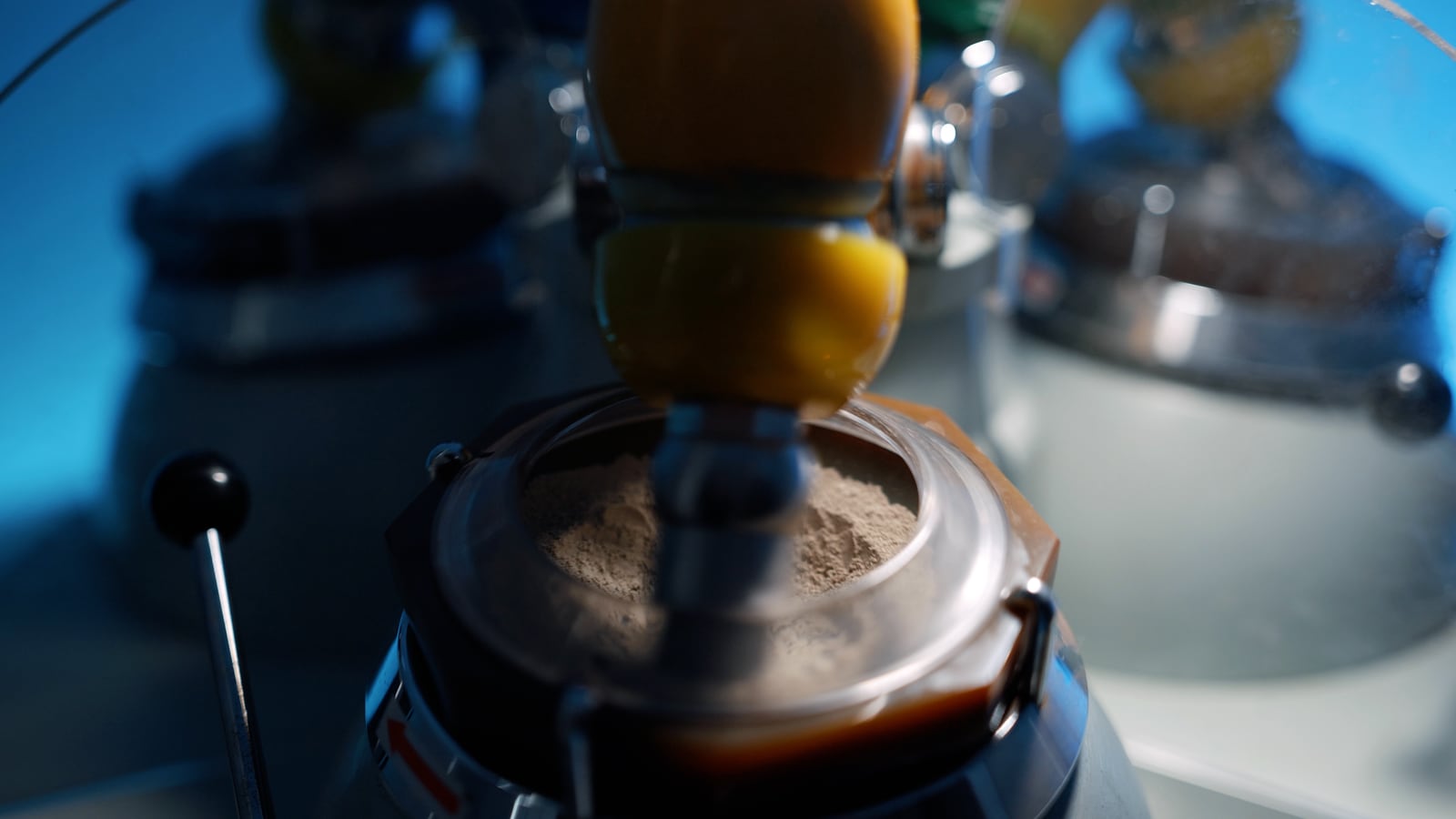
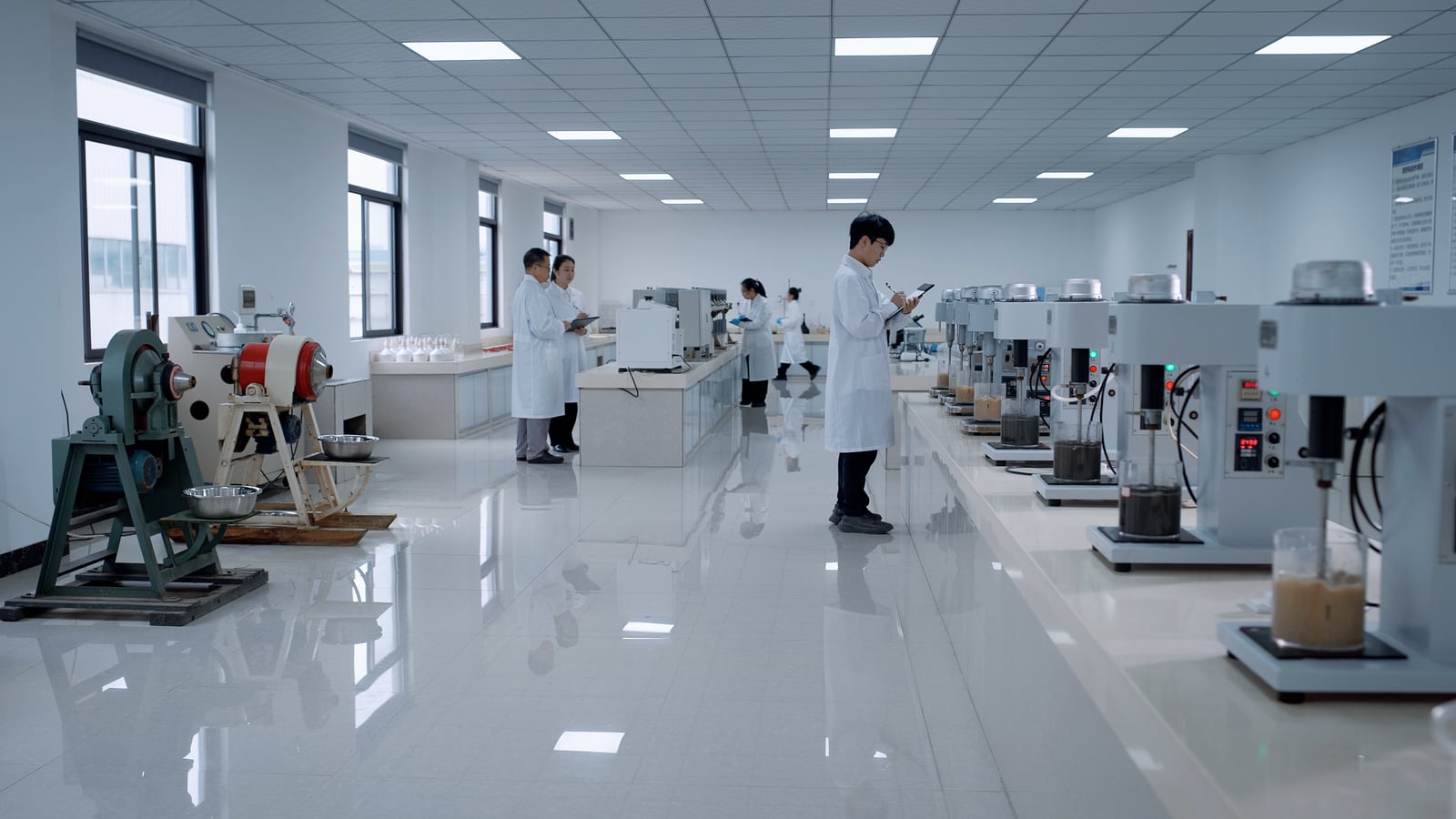
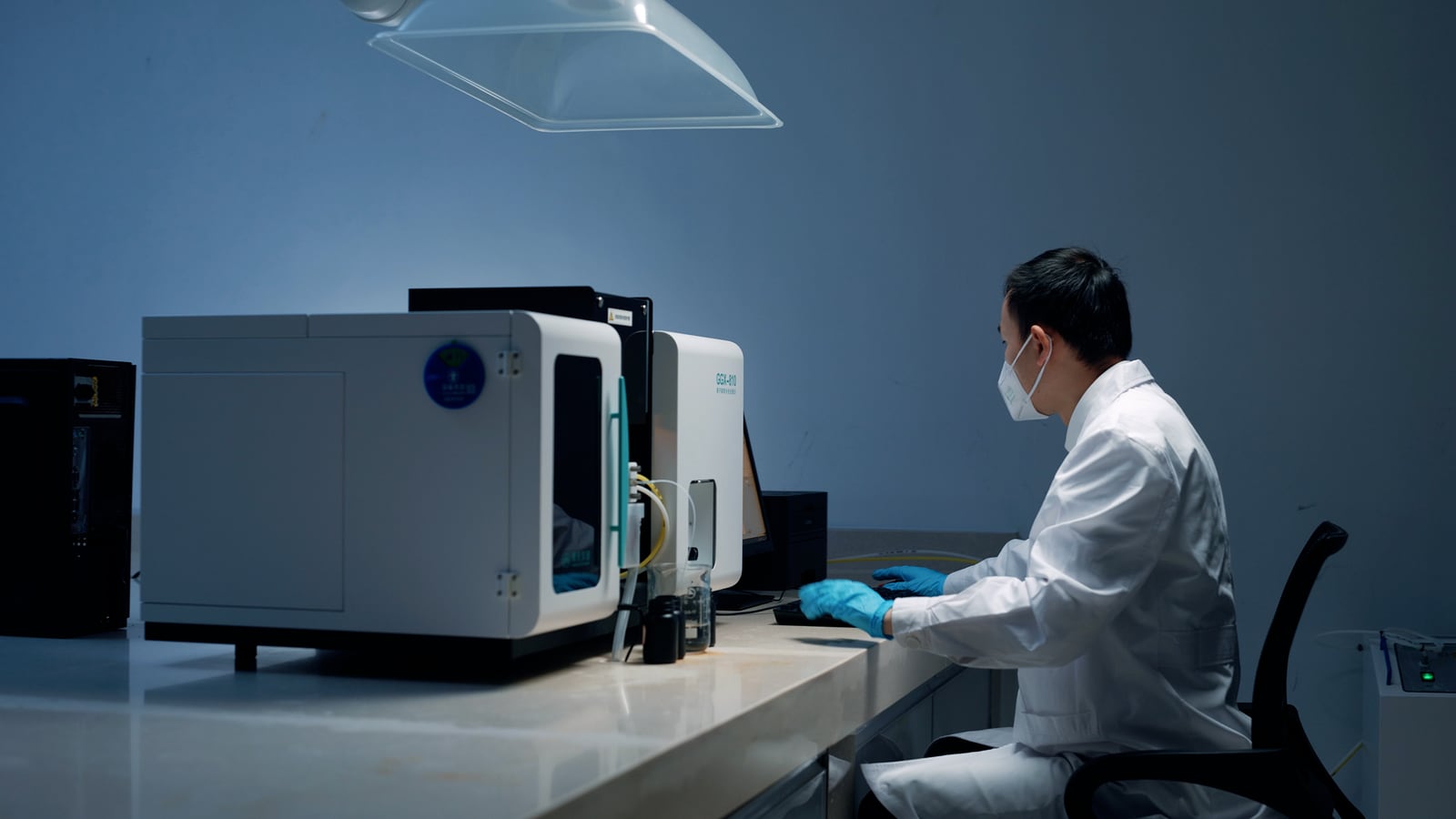
Before industrial application, suitable leaching conditions must be determined on a representative sample of the specific ore. The result depends on mineralogical composition, degree of grinding, gold, copper, arsenic and sulfur content, and other components.
Laboratory testProcess diagram
pHRange controltDurationAuRecovery analysis
01
Sample preparation
Representative sample, crushing and grinding to the required particle size.
02
Process parameters
JinChan dosage, pH, pulp density, temperature and leaching duration.
03
Result control
Determination of gold recovery, reagent consumption and residual gold content in the tailings.
04
Comparison of operating conditions
Comparison of several dosage and process-duration options.
Based on the test results
recommended reagent dosage;
working pH range;
leaching duration;
grinding requirements;
indicative recovery under the laboratory test conditions;
recommendations for industrial verification.
The laboratory result must be confirmed by pilot-scale or industrial trials at the plant site.
Leaching performance depends on mineralogical composition, degree of grinding, reagent consumption, pH, time and other parameters. Below are results from selected published JinChan studies on specific ores.
The results apply only to the tested samples and test conditions and do not guarantee similar recovery on another ore.
Gold-bearing concentrate
PEER-REVIEWED ARTICLE
FEATURED STUDY
Dzhangyr deposit
Hydrometallurgical processing of gold-bearing concentrate
The study of concentrate from the Dzhangyr deposit reported high gold and silver recovery into solution followed by gold sorption onto ion-exchange resin. The results apply to the specific concentrate tested.
97,5%
Au recovery into solution
96%
Ag recovery into solution
100%
Au recovery from solution onto ion-exchange resin
UzbekistanTechnological ore samples
PEER-REVIEWED ARTICLE
Kauldy deposit
Study of technological samples of gold-bearing ore using JinChan and sodium cyanide.
91,55%
Au into solution
91,72%
Ag into solution
Grinding: −0.044 mm
JinChan: 6 kg/t
Time: 24 h
In a separate NaCN test, 90% Au and 88.36% Ag were obtained at a consumption of 1.4 kg/t and a duration of 36 h.
These parameters apply only to the conditions of the published study and are not a universal JinChan operating regime.
KazakhstanGold-sulfide polymetallic ore
PEER-REVIEWED ARTICLE
Comparison of JinChan, YX500 and NaCN
After flotation concentration, the concentrate was subjected to oxidative roasting, followed by comparative leaching.
≈86,5%
Au recovery after flotation concentration and oxidative roasting
Under the studied conditions, after flotation concentration and oxidative roasting, recovery with JinChan, YX500 and NaCN was approximately comparable.
KyrgyzstanRefractory sulfide ore
PEER-REVIEWED ARTICLE
Refractory gold-bearing sulfide ore
Processing flowsheets for finely disseminated refractory sulfide ore were studied. The most effective option combined gravity concentration with subsequent leaching of the tailings.
91,19%
overall Au recovery
The reported figure relates to the combined flowsheet studied, not to the effect of a single reagent. Specific operating parameters are not stated without verification against the full publication.
ChinaGold-bearing ore
PEER-REVIEWED ARTICLE
Xiajiadian Gold Mine
88,55%JinChan, 200 g/t
88,73%NaCN, 200 g/t
89,87%JinChan, 300 g/t
At the same consumption of 200 g/t, JinChan and NaCN gave similar results. At 300 g/t JinChan, 89.87% Au recovery was obtained under the studied conditions. The results apply to the specific ore and conditions studied by the authors; 300 g/t is not a universal recommended JinChan dosage.
TürkiyeTwo ores
PEER-REVIEWED ARTICLE
Çukuralan and Kaymaz
Çukuralan
JinChan
90.89% · 0.72 kg/t
NaCN
91.98% · 0.31 kg/t
Kaymaz
JinChan
81.55% · 1.27 kg/t
NaCN
82.86% · 0.95 kg/t
In both comparisons, JinChan consumption was higher than NaCN consumption. The results apply to the specific Çukuralan and Kaymaz samples tested and are not standards for other ores.
Other comparative studies
Goldfields Ghana LimitedCONFERENCE PAPER
On the ore studied, JinChan showed slower kinetics: about 48 h were required to reach the target recovery of approximately 97%, while NaCN reached a comparable level in 24 h.
This conclusion applies to the ore and conditions examined in this conference study.
TEST SETUP
How we approach testing your ore
01
Sample preparation
Material representativeness, crushing, grinding and preparation of comparable laboratory test portions.